Why Participation-Based Youth Sports May Be the Best Investment We Make in Kids

Picture a Saturday morning basketball game at River Crossing YMCA Sports Center. Every kid plays. No one gets cut. The score is kept, but the coach spends the car ride home talking about how hard the team worked, not whether they won. It may not look or sound like elite sport, but according to a substantial and growing body of research, it is doing something far more valuable than elite sport ever could.
Participation-based youth sports programs, the kind run by community organizations like River Crossing YMCA, which just opened a brand new sports facility on the Doylestown campus, are increasingly recognized not just for recreational programs, but for evidence-based youth development. The research behind these programs is compelling, and it points toward a straightforward conclusion: when sports are designed for participation rather than selection, children thrive.
Sports as a developmental environment
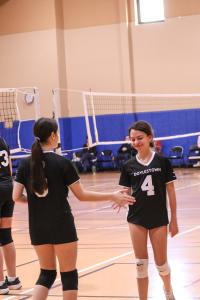
The three foundational pillars of the YMCA are healthy living, youth development and social responsibility. A 2025 report published in the International Journal of Behavioral Nutrition and Physical Activity examined data from 46 long-term studies and found that youth sports focused on participation produced significant positive effects on physical activity levels, overall health and wellbeing, and mental health outcomes across childhood, adolescence, and into adulthood. The effects were consistent across diverse populations and settings. What this means in practical terms is that a child who actively participates in an organized sport is measurably more likely to be physically active, emotionally healthy and socially connected, not just at 12, but at 30.
Self-Determination Theory, developed by psychologists Edward Deci and Richard Ryan, identifies three core psychological needs that drive healthy development: competence, relatedness and autonomy. Participation-based sports programs are uniquely well-positioned to meet all three. Every child who learns a new skill or improves their free throws gains competence. Every child who belongs to a team, is affirmatively called by name by a coach, and shows up to familiar faces gains relatedness. Youth who choose which positions they want to play, or set personal goals for the season, gain a sense of agency over their own development.
What the research shows: benefits of inclusive sports participation
- Significant positive effects on physical activity levels from childhood through adulthood, across diverse populations
- Reduced symptoms of anxiety and depression compared to non-participants
- Higher self-esteem and emotional intelligence, particularly in team sport contexts
- Greater prosocial behavior, wellbeing, and sense of coherence among socially vulnerable youth
- Life skills including resilience, self-regulation, and teamwork that transfer measurably into school and community life
When sports programs are designed around effort and improvement rather than selection and ranking, more children stay, more children grow, and more children carry the benefits forward.
Power of a mastery climate
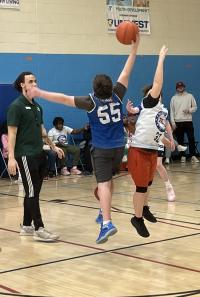
What separates programs like RCY Sports from highly competitive school or club sports are affordability and the presence of what sports psychologists call a mastery climate: an environment in which effort, personal improvement and learning are the primary measures of success. Research consistently shows that children in mastery-oriented programs report higher enjoyment, stronger intrinsic motivation, greater persistence and lower anxiety than children in environments that emphasize ranking and winning. These advantages come alongside skill development, team-building and sportsmanship.
J.G. Nicholls's foundational work on achievement motivation showed that when children are freed from the pressure of social comparison, they engage more deeply and more joyfully in the activity itself. Participation-based programs operationalize this insight by removing the gatekeeping mechanisms of tryouts, cuts, and unequal playing time that force young people into ego-oriented thinking before they have the developmental maturity to handle it. The result is a broader population of children who stay in sports longer, develop greater intrinsic motivation, and are more likely to remain physically active across their lifetimes.
Mastery climate vs. ego climate: what the difference looks like in practice
- Mastery: coaches praise effort, improvement, and personal bests, not rankings or outcome scores
- Mastery: every child receives meaningful playing time regardless of ability level
- Mastery: mistakes are framed as learning opportunities, not sources of embarrassment
- Ego: selection and cuts determine who belongs on the team
- Ego: parental and coach behavior focuses on winning and competitive standing
- Ego: children play primarily for external approval rather than intrinsic enjoyment
Life skills that travel beyond the gym
Some of the most exciting research on participation-based sports programs focuses not on what psychologists call life skills transfer: the measurable degree to which the qualities developed in sports such as resilience, self-regulation, goal-setting, leadership
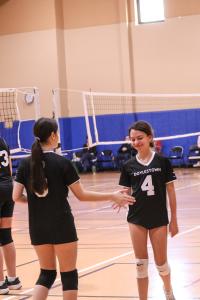
and teamwork carry over into school, family and community life. A randomized study of the LiFEsports program found that sport-based positive youth development programs significantly improved social skill development, including self-control, effort and social responsibility in ways that persisted well after the season ended. These are not soft or incidental outcomes. Self-regulation and prosocial behavior are among the strongest predictors of academic achievement, healthy relationships and long-term wellbeing.
Research on the Police Athletic League program found that youth in barrier-free sports programs developed a measurable sense of belonging in their communities, formed diverse peer relationships, and learned to take initiative in ways they attributed directly to their sports experience. For socially vulnerable youth in particular, the research shows that it is not the frequency or duration of sports participation that drives developmental gains but exposure to a supportive, mastery-oriented, and pedagogically intentional environment. The YMCA model, with its trained coaches, deliberate emphasis on character development and universal access (affordability) is precisely that kind of environment.
Belonging as a health outcome
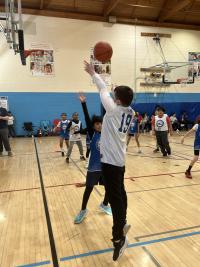
One of the most underappreciated benefits of sports programs is their capacity to build genuine belonging, not as a byproduct, but as a designed feature. Research on sports-based positive youth development consistently identifies a sense of belonging as one of the primary protective factors that programs can cultivate. When children feel that they belong to a team and are valued as members, independent of their performance level, they develop greater self-esteem, emotional resilience and social competence. A 2024 study of Portuguese adolescents found that team sports participation predicted higher life satisfaction, and that this relationship was mediated specifically through self-esteem and emotional intelligence, not through winning or competitive achievement.
This matters enormously in a public health context. Rates of youth anxiety, social isolation, and disengagement from physical activity are rising across age groups. Inclusive community sports programs are one of the few scalable, non-clinical interventions that address all three simultaneously. They get kids moving. They connect children and adolescents to peers and trusted adults. Combined, they build the emotional infrastructure that supports lifelong wellbeing.
What parents can look for in a healthy youth sports program
- Every child plays a meaningful amount of time in every game, regardless of skill level
- Coaches emphasize effort and personal growth in feedback, not just wins and losses
- The program explicitly values character development alongside athletic development
- Children report that they enjoy attending practice, not just games
- Parents are encouraged to celebrate effort rather than outcome after competitions
- The program does not require early single-sport specialization or year-round commitment before adolescence
RCY Sports programs including RCY Gymnastics, which recently opened a brand new gymnastics center in Quakertown, PA, serve as optimal examples of these values, as well as outcomes:
“Infinity [RCY] Gymnastics has given me the opportunity to grow not only as an athlete but also as a person. The discipline and confidence I’ve gained have shaped who I am both inside and outside the gym.”
- Mackenzie Marco, 2025 graduate of River Crossing YMCA’s Infinity Gymnastics program.
Affordability Is A Barrier
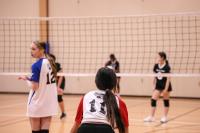
Today' s environment of expensive travel sports leagues and costly one-on-one elite skill training creates additional barriers for young people to continue participating in organized sports. Programs like RCY Sports, including travel leagues, make affordability and access a priority, setting prices for programs at a cost families can afford without taking out a second mortgage. YMCA financial assistance is also available for all families who qualify based on household income. River Crossing YMCA will not turn anyone away for the inability to pay full program costs.
An invitation, not a selection
The YMCA's founding philosophy holds that sports are for everybody. This is not a compromise of athletic standards. It is, as the research confirms, a more sophisticated understanding of what sports can accomplish. When the door is open to every kid regardless of ability (or zip code/household income), when playing time is guaranteed, when effort is praised over score, and when coaches are trained to see development as the primary goal, sports become a reliable pathway to health, confidence, social connection and resilience for the youth who need it most.
About the Author

Andrew Yannarella
References
Bengtsson, D., Svensson, J., Wiman, V., Stenling, A., Lundkvist, E., & Ivarsson, A. (2025). Health-related outcomes of youth sport participation: A systematic review and meta-analysis. International Journal of Behavioral Nutrition and Physical Activity, 22, 89.
Deci, E. L., & Ryan, R. M. (1985). Intrinsic motivation and self-determination in human behavior. Plenum Press.
Deci, E. L., & Ryan, R. M. (2000). The "what" and "why" of goal pursuits: Human needs and the self-determination of behavior. Psychological Inquiry, 11(4), 227–268.
Fernandes, H. M., Costa, H., Esteves, P., Machado-Rodrigues, A. M., & Fonseca, T. (2024). Direct and indirect effects of youth sports participation on emotional intelligence, self-esteem, and life satisfaction. Sports, 12(6), 155.
Fraser-Thomas, J. L., Côté, J., & Deakin, J. (2005). Youth sport programs: An avenue to foster positive youth development. Physical Education and Sport Pedagogy, 10(1), 19–40.
Holt, N. L., Deal, C. J., & Pankow, K. (2020). Positive youth development through sport. In G. Tenenbaum & R. C. Eklund (Eds.), Handbook of sport psychology (3rd ed., pp. 429–446).
Nicholls, J. G. (1989). The competitive ethos and democratic education. Harvard University Press.
Smith, R. E., Smoll, F. L., & Cumming, S. P. (2007). Effects of a motivational climate intervention for coaches on young athletes' sport performance anxiety. Journal of Sport and Exercise Psychology, 29(1), 39–59.
Super, S., Hermens, N., Verkooijen, K., & Koelen, M. (2018). Examining the relationship between sports participation and youth developmental outcomes for socially vulnerable youth. BMC Public Health, 18, 1012.
Telama, R. (2009). Tracking of physical activity from childhood to adulthood: A review. Obesity Facts, 2(3), 187–195.
Weiss, M. R., & Ferrer-Caja, E. (2002). Motivational orientations and sport behavior. In T. S. Horn (Ed.), Advances in sport psychology (2nd ed., pp. 101–183). Human Kinetics.
Recent Articles
YMCA Infinity Gymnastics Team Announces Keystone Games, Nationals Results
