How to Keep Your Kids Cool All Summer Long (Yes, Even at Outdoor Camp)

Summer is basically a second job. Between the sunscreen negotiations, the endless "I'm bored" complaints by 9 a.m., and trying to figure out how to keep your kids safe when it's 90-something degrees outside, the season can feel overwhelming fast. But here's the thing: beating the heat is actually very doable once you have a system. And lucky for us, organizations like the YMCA have been managing kids outdoors in the summer for decades. Our approach is worth borrowing.
Here is everything you need to know to keep your kids cool, safe, and still having the time of their lives this summer.
Water, Water, and More Water
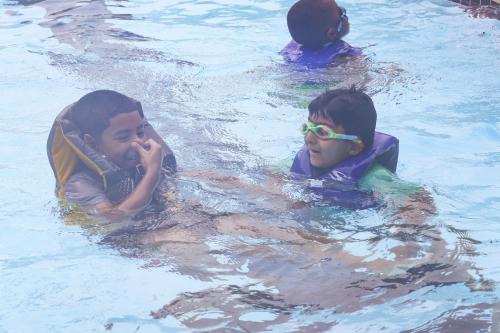
Let's start with the most important one. Kids dehydrate fast, and they often will not tell you they are thirsty until they are already behind. By the time a child feels thirsty, mild dehydration has likely already set in. That means you need to stay ahead of it.
The YMCA recommends that kids drink water every 20 to 30 minutes when playing outside, not just when they ask for it. Pediatrician Dr. Sabella from Cleveland Clinic echoes this, advising parents to keep kids hydrated even the day before a big outdoor activity (Cleveland Clinic, 2022).
Practically speaking, this is easier than it sounds. Send your child out the door with a full reusable water bottle every single day. Even better, freeze it overnight so the water stays cold for hours. Skip the juice boxes and sports drinks for outdoor play. Pediatricians advise steering clear of sugary drinks and energy drinks, which can actually worsen dehydration (Cleveland Clinic, 2022). Water-rich snacks like watermelon, cucumbers and oranges pull double duty as both a snack and a hydration boost.
Sunscreen Is Non-Negotiable (And You Need More of It Than You Think)
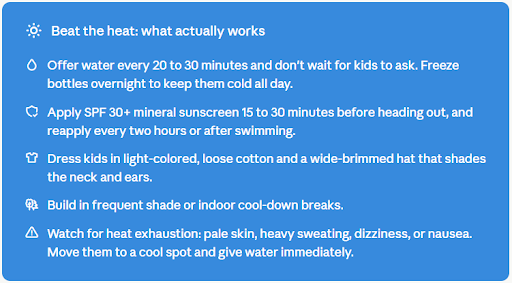
Most of us know sunscreen is important. But there is a difference between a casual swipe before heading out and effectively protecting your child's skin. The American Academy of Pediatrics (AAP) recommends applying a broad-spectrum sunscreen with SPF 30 or higher, putting it on 15 to 30 minutes before your child goes outside so it has time to absorb into the skin (HealthyChildren.org, 2024). Reapply every two hours, and after swimming or sweating.
For kids with sensitive skin, mineral-based sunscreens containing zinc oxide or titanium dioxide are your best bet because they physically block UV rays rather than absorbing them, and the AAP recommends them over chemical-based options like oxybenzone (American Academy of Pediatrics, 2024).
One thing that trips up a lot of parents: shade does not mean sun-safe. UV rays scatter and reflect, meaning your child can still get a sunburn while sitting under a tree or umbrella (Care.com, 2026). Keep applying sunscreen regardless of cloud cover or shade.
Dress Them for the Heat, Not for the Occasion
Cotton is your best friend in summer. Light-colored, loosely fitted cotton clothing stays cooler because it breathes and wicks sweat, which is what helps the body cool itself down. Darker colors absorb more heat from the sun, so when it is genuinely hot outside, reach for whites, yellows, and light blues.
A wide-brimmed hat is worth the battle it takes to get your kid to wear one. A hat that shades the cheeks, chin, ears, and back of the neck dramatically reduces sun and heat exposure on some of the most sensitive areas. Add UV-protective sunglasses and you are set.
Plan Outdoor Activities Wisely
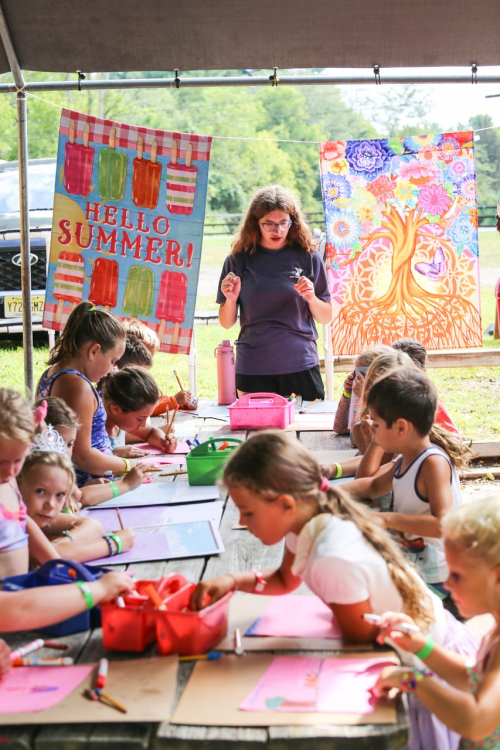
The sun can be intense during the day. Sunscreen is vital. Kids can play outside in the summer sun all day as long as waterproof sunscreen is applied and reapplied frequently (according to sunscreen label instructions). Incorporating water-based activities like swimming, waterplay (water balloons, squirters, etc.) during outdoor play means your kids get just as much time outside while beating the heat. River Crossing YMCA incorporates structured scheduling into our outdoor camp programming specifically to manage heat exposure for kids, incorporating pool time, waterplay, frequent sunscreen application and shade breaks.
On especially hot days, check the UV Index in your weather app before heading out. Higher numbers mean more intense UV radiation, so you can plan accordingly and reduce outdoor time or double up on protection.
Know the Warning Signs of Heat Illness
This is the part every parent needs to know. Heat exhaustion is real, and children are more vulnerable than adults because their bodies heat up three to five times faster (Care.com, 2026). Signs of heat exhaustion include heavy sweating, pale skin, dizziness, nausea, and a rapid pulse. If your child shows any of these symptoms, get them out of the heat immediately, give them water, and apply cool, wet cloths to cool them down. If symptoms do not improve quickly, seek medical care.
Heatstroke is the more serious emergency, and it requires immediate 911 contact. Signs include hot, dry skin (no sweating), confusion, and loss of consciousness.
What the YMCA Gets Right
River Crossing YMCA's outdoor camp model is a good blueprint because it does not rely on parents or kids remembering to do the right thing in the moment. Instead, hydration breaks, shade rotations, mixed indoor and outdoor scheduling, and sunscreen policies are built into the structure of the day. The safety happens automatically because it is part of the routine.
That is exactly what works at home, too. When hydration is scheduled rather than optional, when cool-down breaks are built into the plan, and when sunscreen application is just part of getting dressed in the morning, the whole thing feels far less like vigilance and far more like a normal summer day.
You’ve got this.
References
American Academy of Pediatrics. (2024). Extreme heat: Tips to keep kids safe when temperatures soar. HealthyChildren.org.
American Academy of Pediatrics. (2024). Summer sun, heat & air quality: Tips to keep kids safe. HealthyChildren.org.
Care.com. (2026). 8 summer safety tips for protecting kids.
Cleveland Clinic. (2022). 10 summer safety tips for kids.
Today's Woman. (2026). Summer child safety: Essential tips to prevent injuries.
About the Author

Danielle Cioffi
Recent Articles
YMCA Infinity Gymnastics Team Announces Keystone Games, Nationals Results
