Strength Training: The Missing Piece in Sustainable Weight Loss

In a previous article, we outlined how important strength-training is in supporting health metabolism and weight loss. Strength training, such as lifting weights, muscle resistance exercises, or even body-weight supportive calisthenics builds muscle, increases your heart rate, and sheds fat. As body composition begins to slowly shift to a higher percent muscle mass the body’s metabolic rate increases, therefore slightly increasing the body’s ability to burn calories while at rest (Burning Calories and Increasing Metabolism).
As we get older, and as more people incorporate weight loss medications (GLP-1 and GIP medications) into their diets and routines, we cannot emphasize enough the importance of building muscle through strength training. In this article we outline the vital benefits of building muscle for both active older adults and those taking GLP-1/GIP medications such as Ozempic, Wegovy, Zepbound, and Mounjaro.
Weight-loss medications are effective at reducing appetite and total body weight—but not all weight loss is fat. Without resistance training, a significant portion of loss can come from lean muscle mass, which can negatively affect health, metabolism, and long-term results. Strength training, such as lifting weights, muscle resistance exercises, and calisthenics:
1. Preserves Lean Muscle Mass
- Rapid or appetite-suppressed weight loss increases the risk of muscle loss.
- Strength training sends a signal to the body to retain muscle tissue, even in a calorie deficit.
- Preserving muscle helps maintain physical strength, balance, and independence.
2. Improves Body Composition (Not Just Weight Loss)
- Strength training shifts weight loss toward fat loss rather than muscle loss.
- Many people notice improved tone, posture, and strength even if the changes on the scale seem to be slow moving
- Body recomposition often leads to better health outcomes than weight loss alone.
3. Enhances Blood Sugar and Insulin Sensitivity
- Resistance training improves glucose uptake by muscles, complementing the effects of GLP-1/GIP medications.
- This is especially beneficial for individuals with prediabetes or type 2 diabetes.
4. Protects Bone Health
- Weight loss—especially rapid loss—can reduce bone density.
- Strength and weight-bearing exercises stimulate bone remodeling and reduce fracture risk.
5. Reduces Fatigue and Frailty
- Some people on weight-loss medications report fatigue or weakness.
- Strength training helps maintain functional strength and energy levels, supporting daily activities and quality of life.
Strength training is one of the most effective ways for adults of any age to maintain independence, reduce injury risk, and improve overall health.
Beginning in our 40s, women see dramatic bone loss over time and men see an increase in sudden heart attacks.
Muscle mass, strength, and bone density naturally decline with age—but regular strength training can slow, stop, and even reverse many of these changes. Major health organizations—including the CDC, WHO, ACSM, and National Institute on Aging—recommend regular strength training for older adults to reduce fall risk, preserve muscle and bone, and maintain independence. Strength training among active older adults:
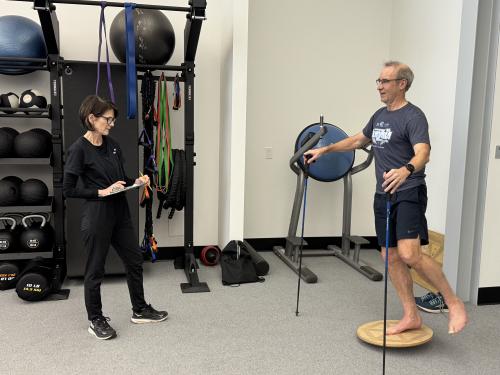
1. Prevents Muscle Loss (Sarcopenia)
- Adults lose muscle mass steadily after age 30, with faster decline after 60.
- Strength training helps preserve and rebuild muscle, improving strength and mobility.
- Maintaining muscle supports daily activities like standing, climbing stairs, and carrying groceries.
2. Reduces Fall and Injury Risk
- Strength training improves leg strength, balance, and coordination, all critical for fall prevention.
- Stronger muscles help protect joints and reduce the severity of injuries if a fall occurs.
3. Supports Bone Health
- Aging increases the risk of osteoporosis and fractures.
- Resistance and weight-bearing exercises stimulate bone growth and help maintain bone density.
- Strong muscles also reduce strain on bones and joints.
4. Improves Balance and Mobility
- Strength training enhances posture, gait, and joint stability.
- It improves confidence in movement, reducing fear of falling.
- Better mobility supports continued independence and active living.
5. Enhances Metabolic and Heart Health
- Strength training helps regulate blood sugar and improves insulin sensitivity.
- It supports healthy cholesterol levels and blood pressure.
- Muscle tissue helps maintain a healthy metabolism, even with fewer calories.
6. Supports Brain and Mental Health
- Regular resistance exercise is linked to improved cognitive function and memory.
- Strength training can reduce symptoms of depression and anxiety.
- Feeling stronger often boosts confidence and quality of life.
7. Helps Manage Chronic Conditions, such as
- Arthritis (improves joint support)
- Osteoporosis
- Type 2 diabetes
- Heart disease (with medical clearance)
- Chronic back or joint pain
Whether you are using weight loss medication or you are an older adult looking to offset some of the physical challenges of aging, strength training and muscle building are vital to your success. Some practical strength training guidelines include:
- Frequency: 2–3 days per week
- Exercises: Focus on major muscle groups (legs, hips, back, chest, arms, core)
- Intensity: Light to moderate resistance; last few reps should feel challenging but controlled, adding weight/resistance over time
- Repetitions: 8–12 reps per exercise
- Equipment: Bodyweight (calisthenics), resistance bands, light dumbbells, or machines
There are a number of resources available at your Y to help determine the best course of action to achieve your desired health and wellness goals. Membership benefits include unlimited access to fun group exercise classes, professional support from trained wellness coaches, and a complimentary state-of-the-art InBody composition scan every 90 days. Visit the Y’s website for more information about the benefits of membership.
River Crossing YMCA’s Healthy Lifestyles Pathway program is a free, 12-week program focusing on weight loss and chronic disease prevention in adults. This program empowers participants to improve their physical health and overall well-being by adopting behavioral change strategies through regular physical activity, nutrition education and social support. Week by week, a certified Y fitness professional coaches participants on implementing realistic and sustainable changes to adopt a healthy lifestyle while building relationships and a sense of community.
Healthy Lifestyles runs in fall, winter and spring in Allentown, Deer Path (Flemington, NJ), Doylestown, Fairless Hills and Quakertown. Please visit the link to learn more about this free, donor-supported wellness program. Whether or not you take medication, remember that small, consistent steps toward wellness make a big difference over time. And you don’t have to go it alone. Join us today!
About the Authors:
Andrea Brown is Vice President of Business Development and Growth. Andrea earned a BA in Marketing from The College of New Jersey in 2004 and has over ten years of experience in the health and wellness industry as an American Council on Exercise Certified Personal Trainer, Group Fitness Instructor and holds a number of specialty certifications including Functional Training, Fitness Nutrition, Precision Nutrition Level 1 Nutrition Coach. Andrea has served the YMCA community since 2012.

Michael Reisman is Association Director of Communications for River Crossing YMCA. Michael earned a BA in Journalism from Rutgers University in 1997 and Masters Degree in Education from the University of Washington in 2011. Michael has served the YMCA community since 2017.
References
American College of Sports Medicine. 2019. “ACSM Position Stand: Exercise and Physical Activity for Older Adults.” Medicine & Science in Sports & Exercise 51 (6): 1314–30.
American Diabetes Association. 2025. “New GLP-1 Therapies Enhance Quality of Weight Loss by Improving Muscle Preservation.” American Diabetes Association Press Release, June 23.
Centers for Disease Control and Prevention. 2023. “Physical Activity and Older Adults.” CDC.
Cheatham, S. W., Davila, E., Dieter, B., Bustillo, E., & Sutton, B. (2024). The NASM guide to sarcopenia: An evidence-based review. National Academy of Sports Medicine.
Codella, R., Senesi, L., and Luzi, L. 2025. “GLP-1 Agonists and Exercise: The Future of Lifestyle Prioritization.” PubMed.
Fragala, M. S., et al. 2019. “Resistance Training for Older Adults: Position Statement From the National Strength and Conditioning Association.” Journal of Strength and Conditioning Research 33 (8): 2019–52.
Liu, C. J., and N. K. Latham. 2009. “Progressive Resistance Strength Training for Improving Physical Function in Older Adults.” Cochrane Database of Systematic Reviews, no. 3.
Medscape. 2025. “Resistance Training + Protein May Lower GLP-1 RA Muscle Loss.” Medscape, April 15.
National Institute on Aging. 2022. “Strength Training: Getting Started.” U.S. Department of Health and Human Services.
Nelson, M. E., et al. 2007. “Physical Activity and Public Health in Older Adults.” Circulation 116 (9): 1094–1105.
PubMed. 2025. “Glucagon-like Peptide-1 Receptor Agonists and Muscle Mass Effects.” PubMed.
PubMed. 2025. “Impact of GLP-1 Receptor Agonist Therapy in Patients at High Risk for Sarcopenia.” PubMed.
PubMed. 2025. “Incretin-Based Weight Loss Pharmacotherapy: Can Resistance Exercise Optimize Changes in Body Composition?” PubMed.
MDIsite. 2025. “Quality of Weight Loss: Preserving Muscle during GLP-1 Therapy.” MDIsite.
Oxford Academic. 2025. “Transforming Care: Implications of GLP-1 on Physical Therapist Practice.” Physical Therapy Journal.
National Academy of Sports Medicine. 2025. “Maximizing the Benefits of GLP-1.” NASM Resource Center.
Peterson, M. D., et al. 2010. “Resistance Exercise for Muscular Strength in Older Adults.” Ageing Research Reviews 9 (3): 226–37.
World Health Organization. 2020. “WHO Guidelines on Physical Activity and Sedentary Behaviour.” World Health Organization.
Recent Articles
May 21, 2026 Nazareth Groundbreaking Video Highlights

200 Runners Kick Off Mother's Day Weekend with Annual YMCA Bucks County Strong 5K and Fun Run
